
News summary

Known Cancer-Associated Genetic Sequences are More Conserved in Long-Lived Species

Source: Fight Aging! • Published: 25 Sept 2026, 10:22

Summarized by Masters of Longevity from Fight Aging!.

Comparative biology article examining how cancer-associated genetic regions and their epigenetic marks differ between long- and short-lived mammals, and what that suggests about longevity strategies.
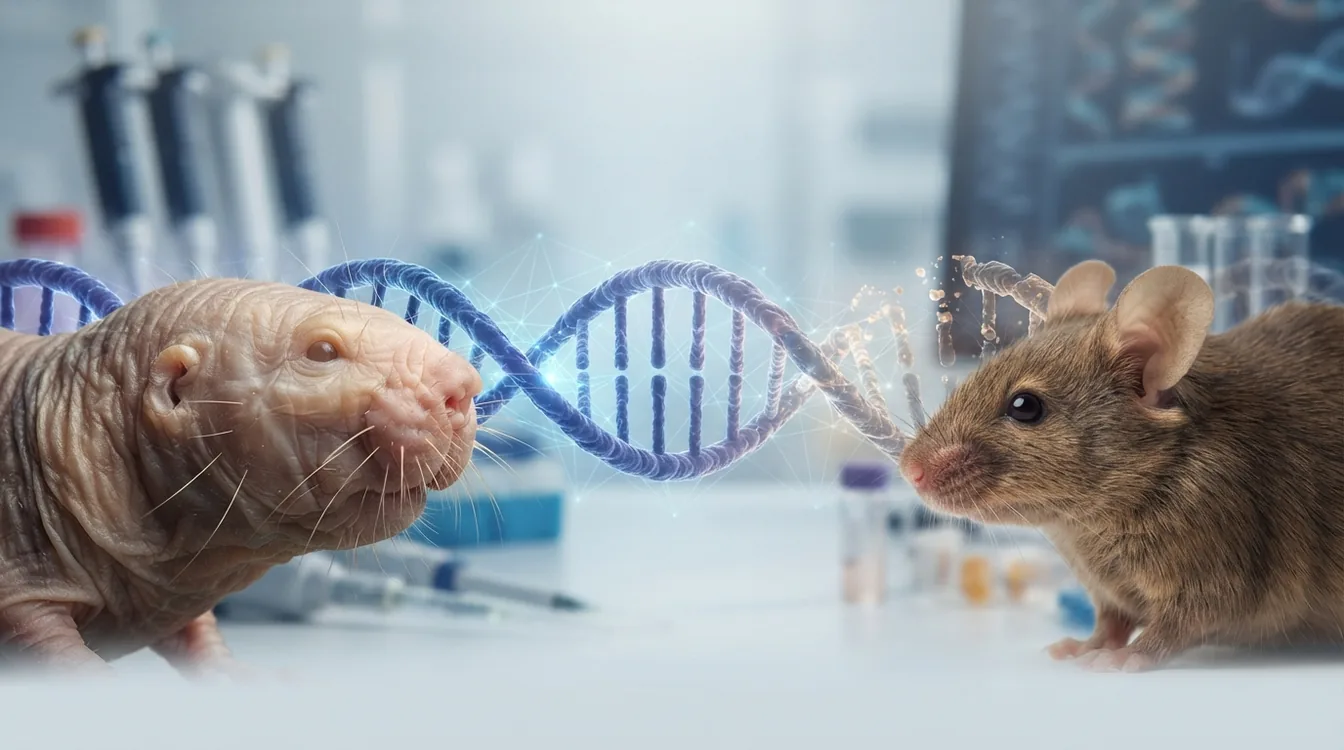
Known Cancer-Associated Genetic Sequences are More Conserved in Long-Lived Species
Key Takeaways
  • Cancer-associated genomic sites are more evolutionarily conserved in long-lived mammals than in short-lived mammals.
  • Long-lived species show pronounced enrichment of m6A RNA methylation at cancer-associated loci despite lower overall m6A levels.
  • Tumor suppressor genes in long-lived mammals contain a higher proportion of m6A-modified transcripts.
Read the full article at Fight Aging! ↗

Continue exploring

Recommended MoL Picks

MoL PickCreatine and Cancer: Why New Mouse Studies Point in Opposite DirectionsCreatine strengthened antitumour immune cells in one mouse study—and promoted metastasis through platelets in another. The apparent contradiction reveals why neither result is a supplement recommendation.MoL PickPlan Your Health Tests in Three MinutesThe free Personal Health Diagnostics Planner turns a short questionnaire into a ranked, personalised PDF: a clearer starting point for deciding which health checks deserve attention now.MoL PickCan You Really Measure Whether You’re Aging More Slowly?A younger epigenetic-age score can look like proof that an intervention is working. A major new analysis shows which clocks detect change—and why movement is not yet the same as longer healthspan.