
News summary

Impaired Immune Surveillance of Senescent Hepatocytes in MASLD: SASP Signaling and Fibrogenic Progression

Source: Frontiers - Health • Published: 02 Oct 2026, 00:00

Summarized by Masters of Longevity from Frontiers - Health.

Hepatocyte senescence and its immune interactions in metabolic fatty liver disease: a concise mini-review exploring mechanisms and implications.
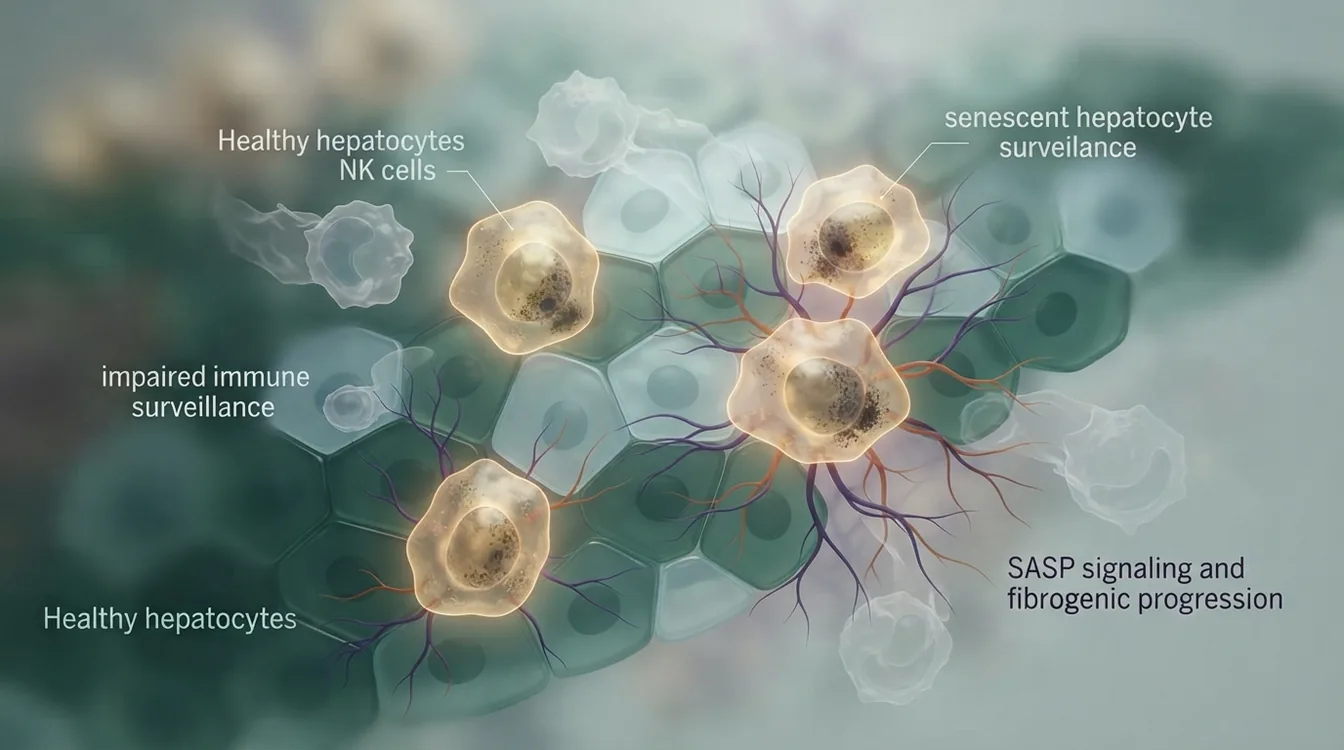
Impaired Immune Surveillance of Senescent Hepatocytes in MASLD: SASP Signaling and Fibrogenic Progression
Key Takeaways
  • Senescent hepatocytes accumulate in MASLD and can persist when metabolic stress continues, promoting local tissue alterations.
  • Persistent SASP signaling from retained senescent hepatocytes drives inflammatory activation of macrophages and fibrogenic activation of hepatic stellate cells.
  • Effective immune surveillance can clear senescent hepatocytes transiently, but impaired or overwhelmed clearance favors fibrotic progression in chronic MASLD.
Read the full article at Frontiers - Health ↗

Continue exploring

Recommended MoL Picks

MoL PickReducing Inflammation from Ageing Cells: What a Mouse Study FoundResearchers reduced the inflammatory signals released by cells that had stopped dividing. Older mice also improved on some strength and frailty tests. Whether this approach could help people remains unknown.MoL PickThe Next Obesity-Drug Race Is About What Weight You LoseRegeneron’s myostatin and activin A antibodies point to a sharper question for the GLP-1 era: not whether people can lose more weight, but whether medicine can preserve the tissue that makes weight loss healthier.MoL PickSemaglutide Extended Lifespan in Mice. What Would Make It a Human Longevity Drug?A new animal study sharpens an important question: when do benefits in a particular disease become evidence for a longer, healthier life?