
News summary

Heterogeneity in secondary follicle development buffers the lifespan of activated oocytes to optimize female fertility in mice

Source: Nature Aging • Published: 08 Oct 2026, 00:00

Summarized by Masters of Longevity from Nature Aging.

Activated oocyte development across the reproductive lifespan: a research article mapping developmental trajectories and regulatory checkpoints that shape follicle progression and longevity.
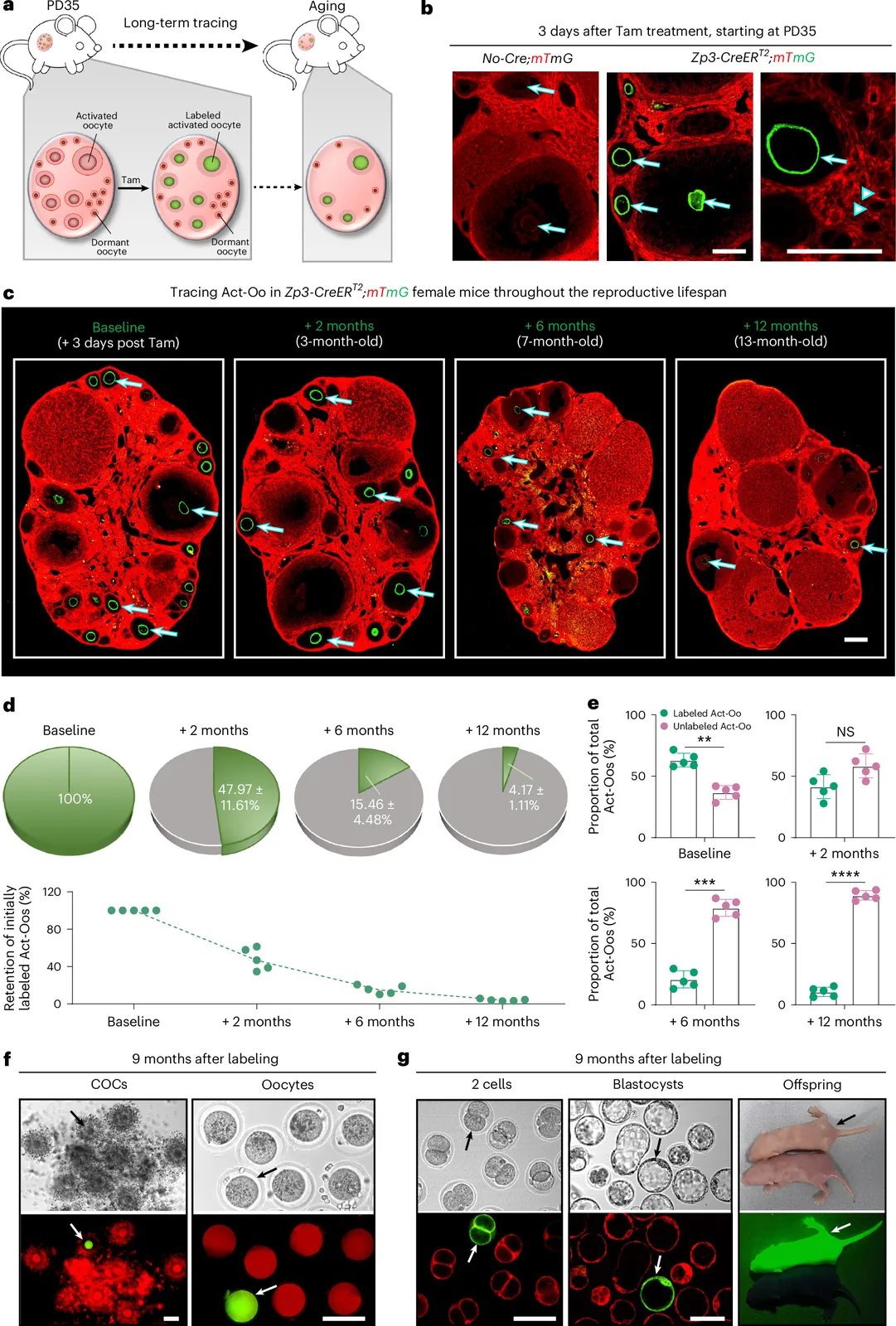
Heterogeneity in secondary follicle development buffers the lifespan of activated oocytes to optimize female fertility in mice
Key Takeaways
  • Lineage tracing shows activated oocytes differ in lifespan with some persisting from early adulthood to reproductive termination.
  • Divergence in activated oocyte longevity emerges at the secondary follicle stage and creates a buffering ovarian reserve.
  • FURIN regulates activated oocyte metabolic state and modulates follicle growth through the oocyte-secreted factor KITL signaling axis.
Read the full article at Nature Aging ↗

Continue exploring

Recommended MoL Picks

MoL PickSemaglutide Extended Lifespan in Mice. What Would Make It a Human Longevity Drug?A new animal study sharpens an important question: when do benefits in a particular disease become evidence for a longer, healthier life?MoL PickGrowth Hormone Receptor Deletion Extends Mouse LifespanStudy summary: researchers switched off the growth hormone receptor in middle-aged mice and followed survival and physical function.MoL PickApoB: The cholesterol signal LDL can missIn longevity medicine, the useful biomarkers are not always the exotic ones. ApoB is a relatively simple blood test that can sharpen cardiovascular prevention when LDL-C looks reassuring but particle burden remains high.