
News summary

Hepatocytes promote liver metastasis of pancreatic cancer by providing serine

Source: Nature - Main • Published: 23 Sept 2026, 00:00

Summarized by Masters of Longevity from Nature - Main.

Study shows serine-deficient pancreatic cancer cells reprogram nearby hepatocytes to upregulate serine synthesis, supporting liver metastatic growth and identifying intervention points.
Hepatocytes promote liver metastasis of pancreatic cancer by providing serine
Key Takeaways
  • The liver is the primary site of metastasis in pancreatic ductal adenocarcinoma (PDAC), and liver metastases are a major cause of mortality 1 , 2.
  • Nutrient availability in the metastatic niche influences colonization efficiency; however, the metabolic heterogeneity of disseminated tumour cells can also reshape the local microenvironment 3 , 4 , 5.
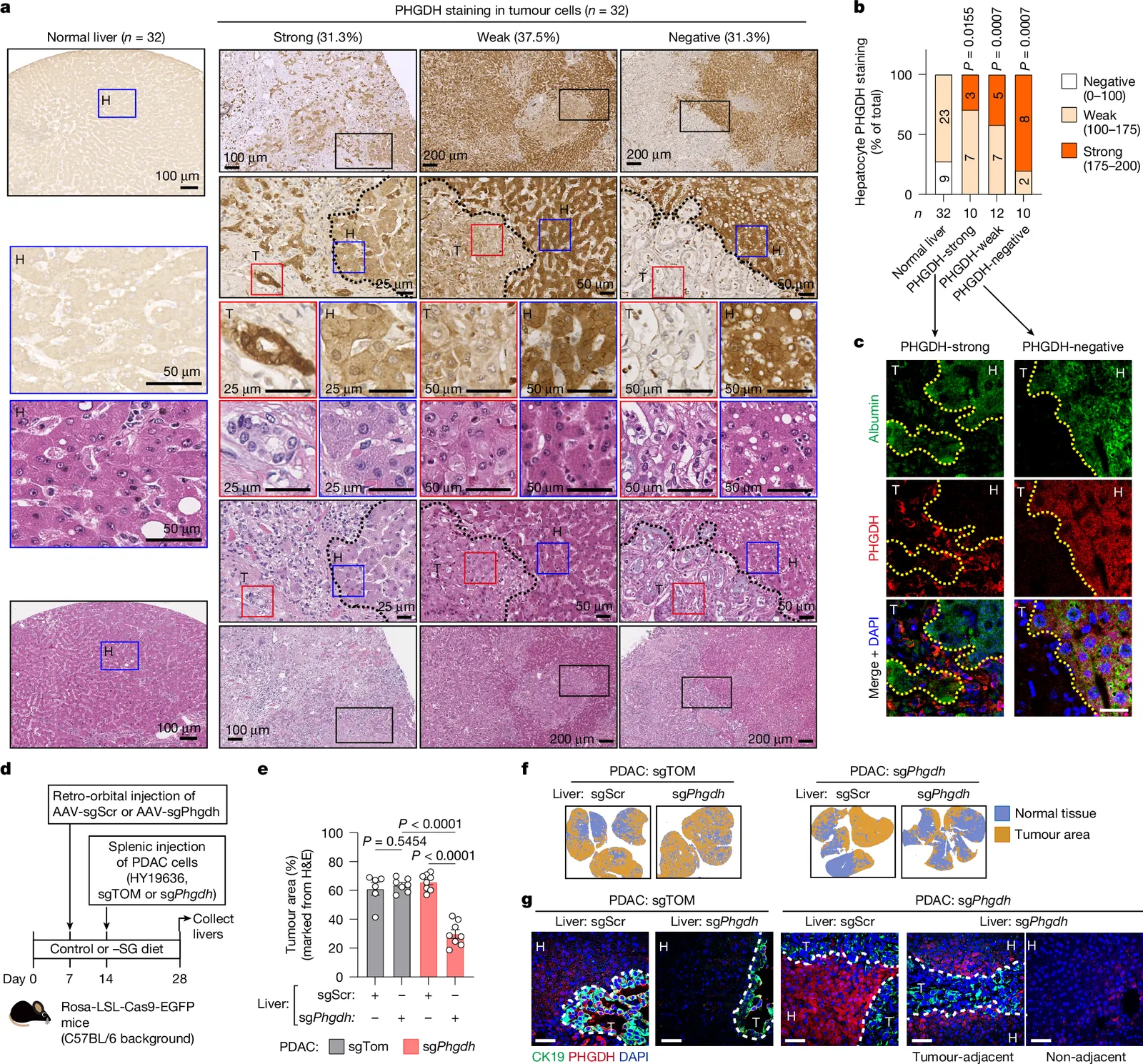
  • Loss of phosphoglycerate dehydrogenase (PHGDH), the rate-limiting enzyme in de novo serine biosynthesis, is observed in nearly 40% of PDACs, and renders these cells dependent on exogenous serine (exSer) 6.
Read the full article at Nature - Main

Continue exploring

Recommended MoL Picks

MoL PickCreatine and Cancer: Why New Mouse Studies Point in Opposite DirectionsCreatine strengthened antitumour immune cells in one mouse study—and promoted metastasis through platelets in another. The apparent contradiction reveals why neither result is a supplement recommendation.MoL PickSemaglutide Extended Lifespan in Mice. What Would Make It a Human Longevity Drug?A new animal study sharpens an important question: when do benefits in a particular disease become evidence for a longer, healthier life?MoL PickApoB: The cholesterol signal LDL can missIn longevity medicine, the useful biomarkers are not always the exotic ones. ApoB is a relatively simple blood test that can sharpen cardiovascular prevention when LDL-C looks reassuring but particle burden remains high.