
News summary

Global Nanomedicine Market to Reach USD 581.2 Bn. by 2034, Driven by Rising Chronic Disease Prevalence, Expanding Nanotechnology-Based Drug Delivery, and Advances in Precision Diagnostics and Therapeutics Says Maximize Market Research

Source: PR Newswire • Published: 24 Sept 2026, 22:30

Summarized by Masters of Longevity from PR Newswire.

The article previews a market research report on nanomedicine trends, technologies, and commercial drivers shaping future healthcare innovation.
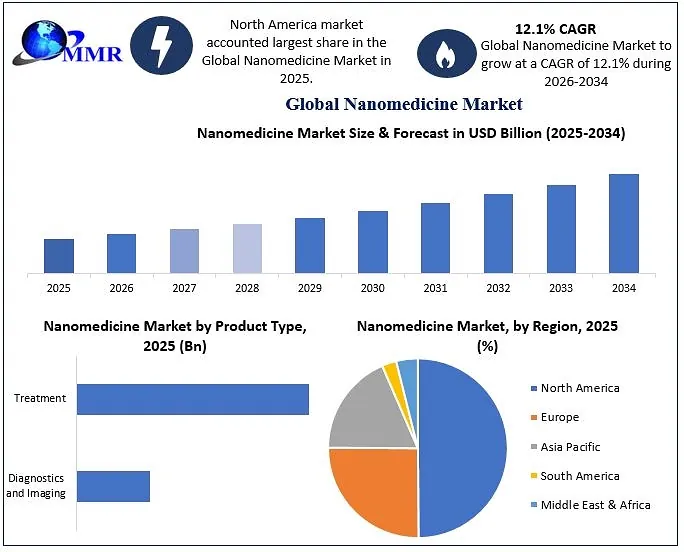
Global Nanomedicine Market to Reach USD 581.2 Bn. by 2034, Driven by Rising Chronic Disease Prevalence, Expanding Nanotechnology-Based Drug Delivery, and Advances in Precision Diagnostics and Therapeutics Says Maximize Market Research
Key Takeaways
  • By 2034, Driven by Rising Chronic Disease Prevalence, Expanding Nanotechnology-Based Drug Delivery, and Advances in Precision Diagnostics and Therapeutics Says Maximize Market Research News provided by Maximize Market Research Pvt.
  • The rising prevalence of chronic and complex diseases, growing demand for targeted therapies, increasing adoption of personalized medicine, and advances in nanoscale technologies are supporting the growth of the global nanomedicine market.
  • Increasing use of nanoparticle-based drug delivery, nanodiagnostics, nano-enabled vaccines, nanostructured implants, and precision therapeutic platforms is transforming disease diagnosis and treatment.
Read the full article at PR Newswire ↗

Continue exploring

Recommended MoL Picks

MoL PickBiotin for Hair Growth: The Weak Evidence—and the Blood-Test Risk Most People MissBiotin deficiency can affect hair. That does not mean more biotin makes healthy hair grow—and high doses can distort important laboratory results.MoL PickPlan Your Health Tests in Three MinutesThe free Personal Health Diagnostics Planner turns a short questionnaire into a ranked, personalised PDF: a clearer starting point for deciding which health checks deserve attention now.MoL PickCan You Really Measure Whether You’re Aging More Slowly?A younger epigenetic-age score can look like proof that an intervention is working. A major new analysis shows which clocks detect change—and why movement is not yet the same as longer healthspan.