
News summary

Fat Infiltration into Muscle Tissue as a Biomarker of Aging

Source: Fight Aging! • Published: 05 Oct 2026, 18:33

Summarized by Masters of Longevity from Fight Aging!.

Review of evidence that fat infiltration into skeletal muscle increases with age and varies by sex, race, and body location, proposing myosteatosis as a potential aging biomarker.
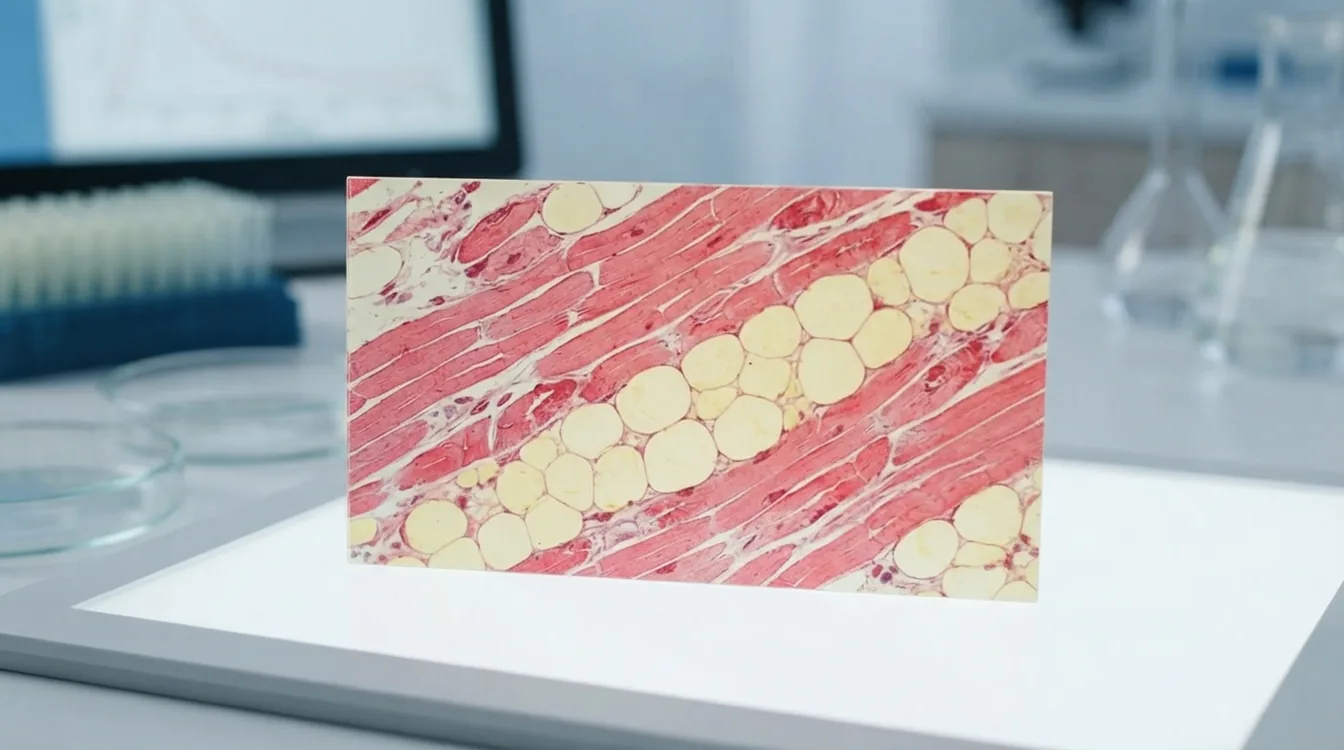
Fat Infiltration into Muscle Tissue as a Biomarker of Aging
Key Takeaways
  • So there is relatively little drive to compare, contrast, and optimize approaches shown to slow or reverse aging in laboratory species.
  • One might hope that a robust measure of biological age would speed up the research community's efforts to build a basis for greater human longevity.
  • There are obviously a great many existing biomarkers of aging , some of which are very straightforward to measure.
Read the full article at Fight Aging! ↗

Continue exploring

Recommended MoL Picks

MoL PickCan You Really Measure Whether You’re Aging More Slowly?A younger epigenetic-age score can look like proof that an intervention is working. A major new analysis shows which clocks detect change—and why movement is not yet the same as longer healthspan.MoL PickApoB: The cholesterol signal LDL can missIn longevity medicine, the useful biomarkers are not always the exotic ones. ApoB is a relatively simple blood test that can sharpen cardiovascular prevention when LDL-C looks reassuring but particle burden remains high.MoL PickThe Next Obesity-Drug Race Is About What Weight You LoseRegeneron’s myostatin and activin A antibodies point to a sharper question for the GLP-1 era: not whether people can lose more weight, but whether medicine can preserve the tissue that makes weight loss healthier.