
News summary

Development and characterization of α-Mangostin-loaded polymeric nanoparticles for intranasal brain delivery: pharmacokinetic evaluation and preliminary in-vitro neuroprotective assessment

Source: Nature - Biotechnology • Published: 19 Nov 2026, 00:00

Summarized by Masters of Longevity from Nature - Biotechnology.

Α‑Mangostin nanoparticles raised brain levels and improved BV‑2 cell protection.
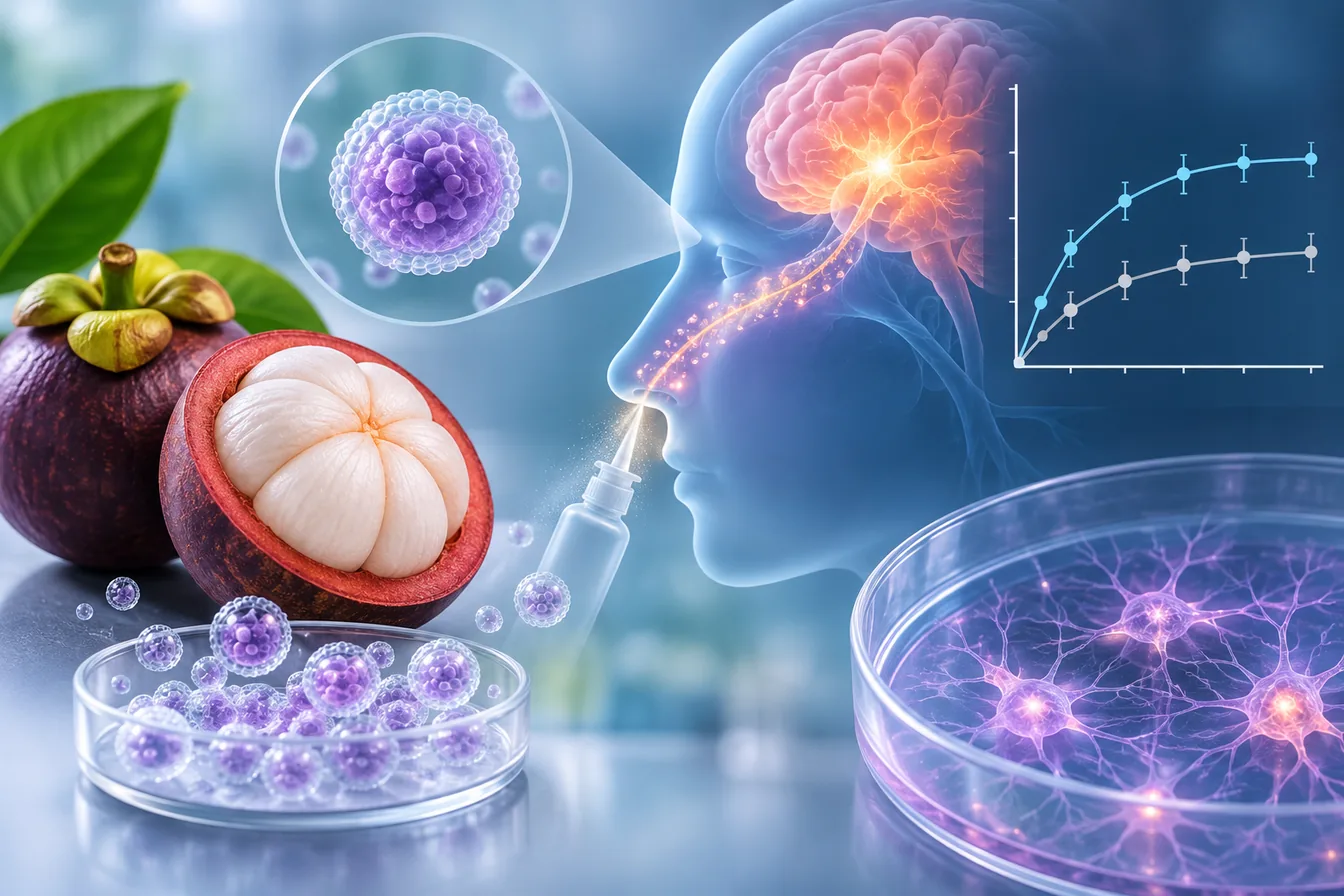
Development and characterization of α-Mangostin-loaded polymeric nanoparticles for intranasal brain delivery: pharmacokinetic evaluation and preliminary in-vitro neuroprotective assessment
Key Takeaways
  • PLGA nanoparticles were ~233 nm with high encapsulation efficiency.
  • Intranasal nanoparticles increased brain penetration versus drug suspension.
  • Neuroprotection in BV‑2 cells was shown after oxygen‑glucose deprivation.
Read the full article at Nature - Biotechnology ↗

Continue exploring

Recommended MoL Picks

MoL PickWhat Changes in the Human Hippocampus with Age?A study of 40 postmortem brains maps a midlife shift in immune cells and a wider loss of cellular and genome organisation—but it does not show how to prevent cognitive decline.MoL PickSemaglutide Extended Lifespan in Mice. What Would Make It a Human Longevity Drug?A new animal study sharpens an important question: when do benefits in a particular disease become evidence for a longer, healthier life?MoL PickThe Next Obesity-Drug Race Is About What Weight You LoseRegeneron’s myostatin and activin A antibodies point to a sharper question for the GLP-1 era: not whether people can lose more weight, but whether medicine can preserve the tissue that makes weight loss healthier.