
News summary

Association of complete blood cell count-derived inflammatory biomarkers with the prevalence and mortality risk of osteoporosis: evidence from NHANES and an independent Chinese hospital-based case-control cohort

Source: Frontiers - Health • Published: 11 Oct 2026, 00:00

Summarized by Masters of Longevity from Frontiers - Health.

Routine blood-count inflammation markers and their links to osteoporosis outcomes — a population and hospital cohort study preview that highlights study scope and approach.
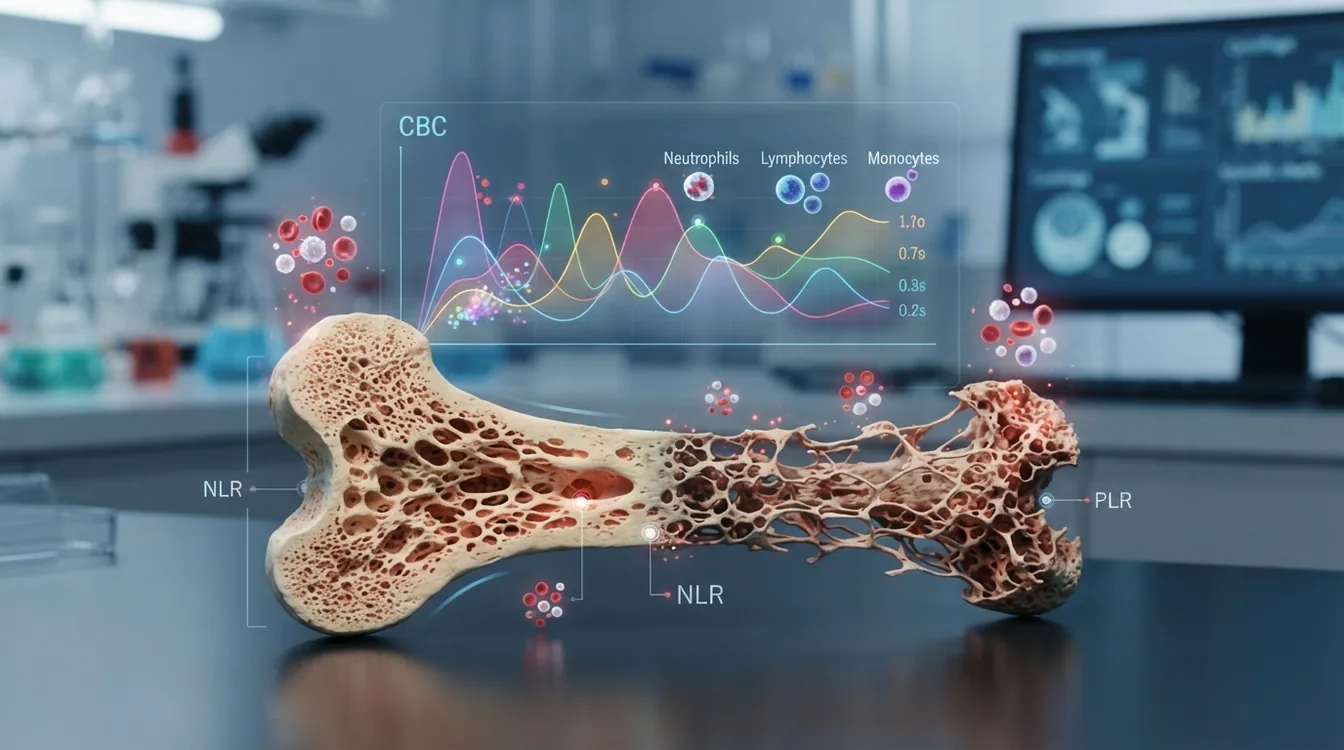
Association of complete blood cell count-derived inflammatory biomarkers with the prevalence and mortality risk of osteoporosis: evidence from NHANES and an independent Chinese hospital-based case-control cohort
Key Takeaways
  • In NHANES (n=16,539; 1,223 osteoporosis cases) NLR, MLR, NMLR, and SIRI were positively associated with all-cause mortality after multivariable adjustment and FDR correction.
  • CBC-derived biomarkers showed no significant association with osteoporosis prevalence or CVD mortality after multivariable adjustment and FDR correction.
  • An independent Chinese hospital case-control cohort (63 patients, 63 controls) found higher NLR, MLR, NMLR, and SIRI in osteoporosis patients, especially females.
Read the full article at Frontiers - Health ↗

Continue exploring

Recommended MoL Picks

MoL PickApoB: The cholesterol signal LDL can missIn longevity medicine, the useful biomarkers are not always the exotic ones. ApoB is a relatively simple blood test that can sharpen cardiovascular prevention when LDL-C looks reassuring but particle burden remains high.MoL PickBiotin for Hair Growth: The Weak Evidence—and the Blood-Test Risk Most People MissBiotin deficiency can affect hair. That does not mean more biotin makes healthy hair grow—and high doses can distort important laboratory results.MoL PickReducing Inflammation from Ageing Cells: What a Mouse Study FoundResearchers reduced the inflammatory signals released by cells that had stopped dividing. Older mice also improved on some strength and frailty tests. Whether this approach could help people remains unknown.