
News summary

Anti-CXCR3 Therapy Reduces Harmful Immune Cell Infiltration into the Brain

Source: Fight Aging! • Published: 06 Oct 2026, 10:22

Summarized by Masters of Longevity from Fight Aging!.

Anti-CXCR3 research: a concise news-style summary describing a preclinical study about preventing immune cell entry into the brain and its potential therapeutic implications.
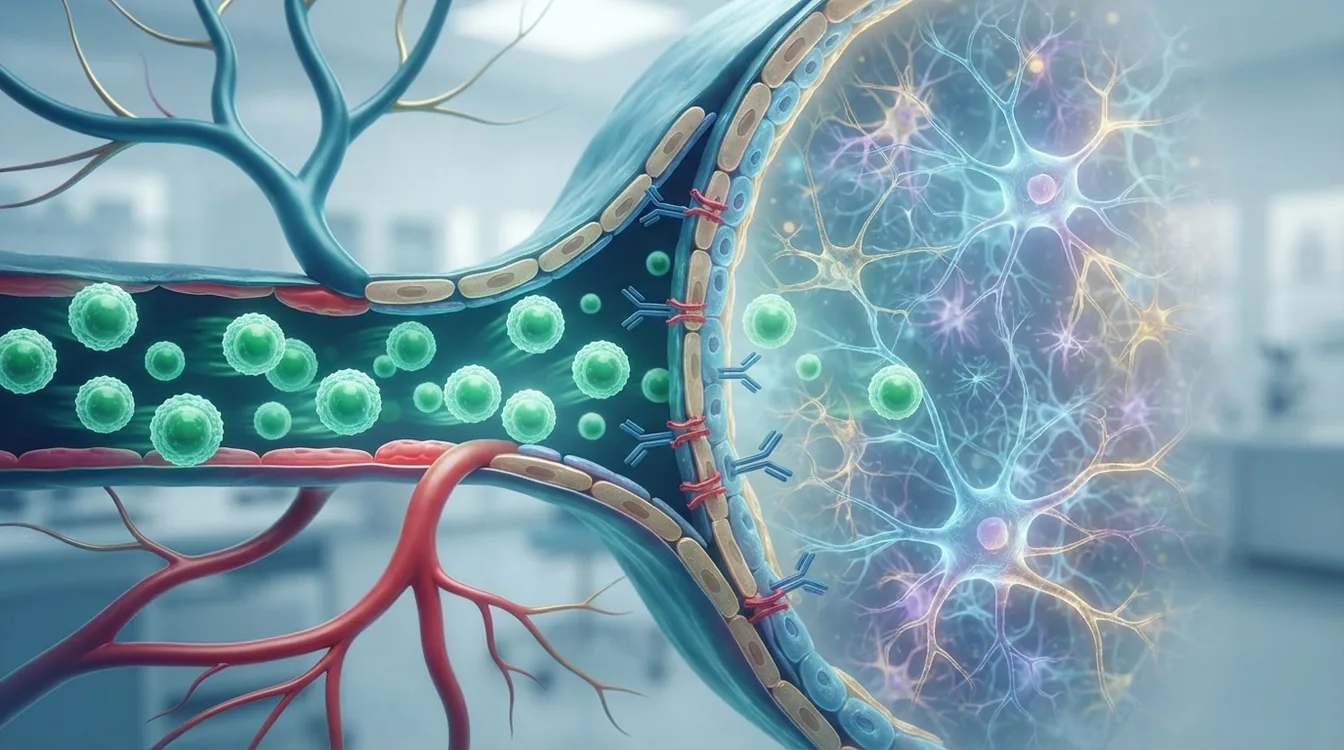
Anti-CXCR3 Therapy Reduces Harmful Immune Cell Infiltration into the Brain
Key Takeaways
  • Antibody blockade or genetic deletion of CXCR3 or CXCL10 prevented IFNγ‑driven brain T cell infiltration in an acute hippocampal model.
  • Chronic systemic anti‑CXCR3 treatment reduced parenchymal CD4+ and CD8+ T cell accumulation and attenuated neurodegeneration in a tauopathy mouse model.
  • CXCR3 blockade lowered microglial MHC‑II expression and shifted brain T cells toward reduced activation and greater CD8+ terminal exhaustion.
Read the full article at Fight Aging! ↗

Continue exploring

Recommended MoL Picks

MoL PickWhat Changes in the Human Hippocampus with Age?A study of 40 postmortem brains maps a midlife shift in immune cells and a wider loss of cellular and genome organisation—but it does not show how to prevent cognitive decline.MoL PickGrowth Hormone Receptor Deletion Extends Mouse LifespanStudy summary: researchers switched off the growth hormone receptor in middle-aged mice and followed survival and physical function.MoL PickCreatine and Cancer: Why New Mouse Studies Point in Opposite DirectionsCreatine strengthened antitumour immune cells in one mouse study—and promoted metastasis through platelets in another. The apparent contradiction reveals why neither result is a supplement recommendation.