
News summary

AI in Clinical Trials Market to Reach USD 7.32 Billion by 2034 as AI Reshapes Patient Recruitment, Data Analysis and Drug Development, says Maximize Market Research

Source: PR Newswire • Published: 25 Sept 2026, 22:15

Summarized by Masters of Longevity from PR Newswire.

AI in clinical trials: a market outlook piece that previews how artificial intelligence tools are being applied across recruitment, analysis and drug development workflows, and what adoption challenges and opportunities readers should expect.
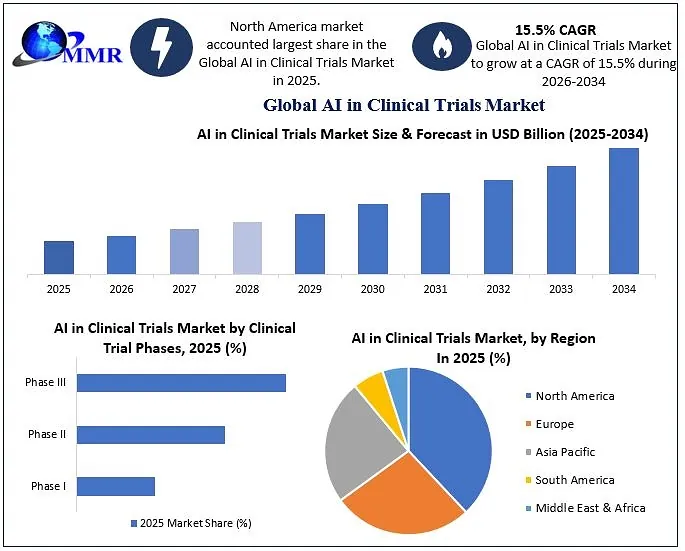
AI in Clinical Trials Market to Reach USD 7.32 Billion by 2034 as AI Reshapes Patient Recruitment, Data Analysis and Drug Development, says Maximize Market Research
Key Takeaways
  • AI use across clinical trials is expanding to speed patient recruitment, trial design, and large-scale data analysis efficiently.
  • Widespread adoption faces barriers including data privacy concerns, regulatory compliance, and the need for high-quality clinical data.
  • Pharmaceutical companies, CROs, hospitals, and research institutes are increasingly integrating machine learning, NLP, and deep learning to support drug discovery and personalized medicine.
Read the full article at PR Newswire ↗

Continue exploring

Recommended MoL Picks

MoL PickThe Next Obesity-Drug Race Is About What Weight You LoseRegeneron’s myostatin and activin A antibodies point to a sharper question for the GLP-1 era: not whether people can lose more weight, but whether medicine can preserve the tissue that makes weight loss healthier.MoL PickFrom Metrics to Better LivingEverstride’s May 2026 Consumer Health Market Briefing shows a wellness market moving from products to systems, from tracking to guidance, and from optimization to meaning. The next winners in longevity may not be the companies that measure the most. They may be the ones that help consumers translate health data into a life they actually want to live.MoL PickSemaglutide Extended Lifespan in Mice. What Would Make It a Human Longevity Drug?A new animal study sharpens an important question: when do benefits in a particular disease become evidence for a longer, healthier life?