
News summary

Age-Related Decline in Chaperone-Mediated Autophagy Impairs Clearance of Senescence Cells

Source: Fight Aging! • Published: 12 Oct 2026, 18:35

Summarized by Masters of Longevity from Fight Aging!.

This piece previews a research article examining how age-related decline in a specific cellular cleanup pathway affects senescent cell behavior and immune removal, and what that might mean for therapies.
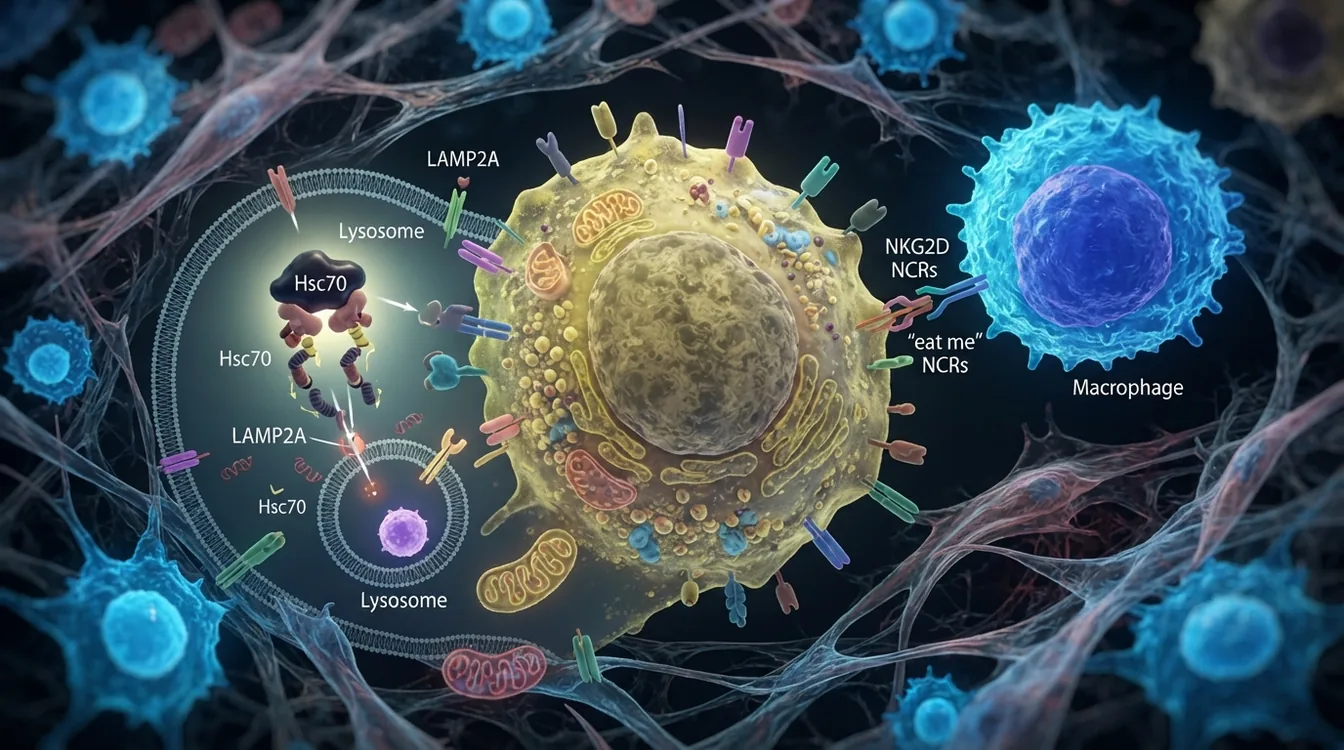
Age-Related Decline in Chaperone-Mediated Autophagy Impairs Clearance of Senescence Cells
Key Takeaways
  • Senescent cells are created throughout life in tissues throughout the body, but an established population of lingering senescent cells only begins to accumulate in later life.
  • An established population of senescent cells that generates signaling constantly, even in relatively small numbers compared to the overall count of cells in a tissue, is highly disruptive to tissue structure and function.
  • To what degree is the age-related failure of immune clearance of senescent cells a consequence of harmful changes in the immune system versus harmful changes in the senescent cells themselves?.
Read the full article at Fight Aging! ↗

Continue exploring

Recommended MoL Picks

MoL PickWhat Changes in the Human Hippocampus with Age?A study of 40 postmortem brains maps a midlife shift in immune cells and a wider loss of cellular and genome organisation—but it does not show how to prevent cognitive decline.MoL PickReducing Inflammation from Ageing Cells: What a Mouse Study FoundResearchers reduced the inflammatory signals released by cells that had stopped dividing. Older mice also improved on some strength and frailty tests. Whether this approach could help people remains unknown.MoL PickMelatonin and Heart Failure: What the Evidence Actually ShowsA 2025 study linked melatonin use with heart failure. A 2026 analysis found no significant association. Their different designs explain why the question remains open.