
News summary

A Hypertrophic Stimulus Drives Age‐Dependent Transcript Isoform Switching With and Without Differential Gene Expression in Skeletal Muscle

Source: Aging Cell • Published: 15 Oct 2026, 06:18

Summarized by Masters of Longevity from Aging Cell.

Skeletal muscle transcriptome changes after a hypertrophic stimulus, highlighting age-related shifts in isoform usage and regulatory complexity you’ll want to examine.
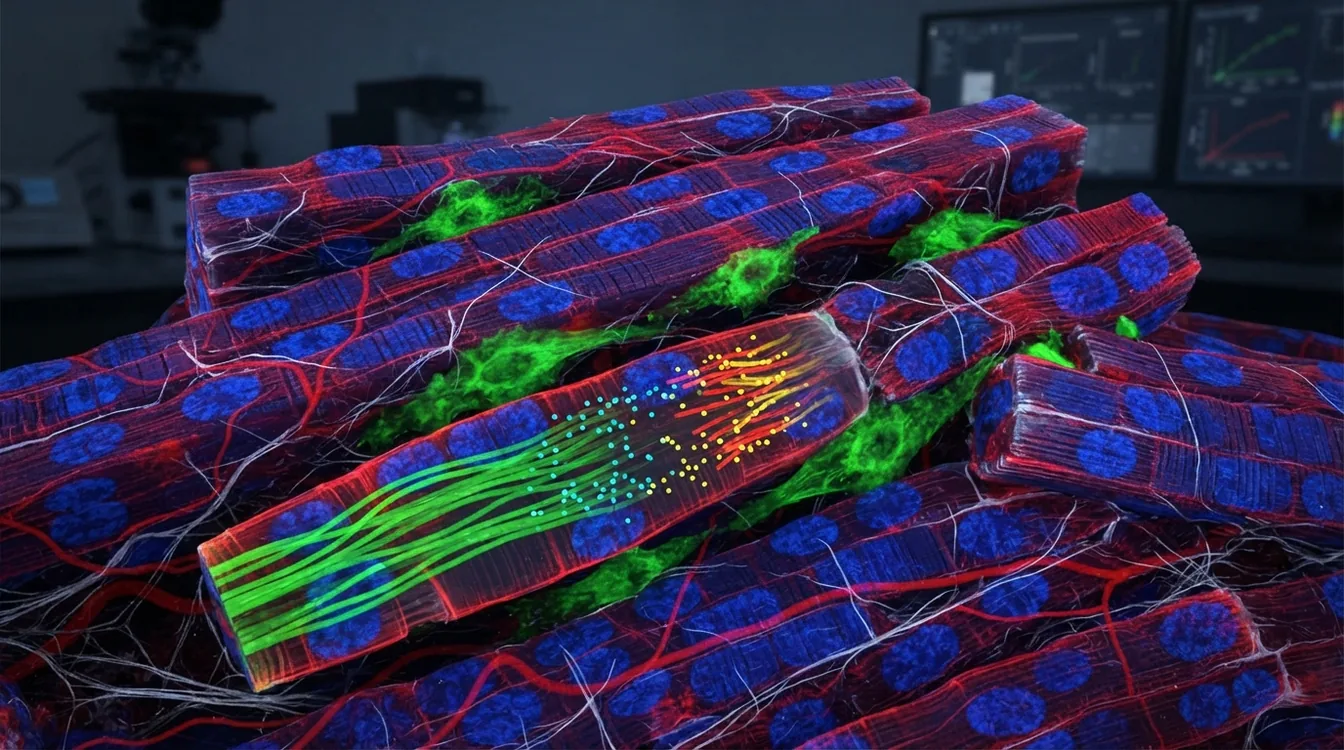
A Hypertrophic Stimulus Drives Age‐Dependent Transcript Isoform Switching With and Without Differential Gene Expression in Skeletal Muscle
Key Takeaways
  • A hypertrophic mechanical stimulus triggered widespread alternative isoform usage in skeletal muscle across age groups.
  • Some isoform switching occurred without corresponding differential gene expression, indicating post-transcriptional regulation.
  • Age influenced the pattern and magnitude of isoform changes, producing distinct transcriptomic responses in young versus old muscle.
Read the full article at Aging Cell ↗

Continue exploring

Recommended MoL Picks

MoL PickReducing Inflammation from Ageing Cells: What a Mouse Study FoundResearchers reduced the inflammatory signals released by cells that had stopped dividing. Older mice also improved on some strength and frailty tests. Whether this approach could help people remains unknown.MoL PickCan Exergaming Improve Balance? What Older Adults Should KnowMotion-controlled games may make balance practice easier to repeat. The evidence supports a structured adjunct—not a fall-proofing shortcut.MoL PickWhat Changes in the Human Hippocampus with Age?A study of 40 postmortem brains maps a midlife shift in immune cells and a wider loss of cellular and genome organisation—but it does not show how to prevent cognitive decline.