
News summary

A cross-species single-cell kidney epigenome atlas reveals epithelial-dominant aging-like states in disease

Source: Nature Aging • Published: 24 Sept 2026, 00:00

Summarized by Masters of Longevity from Nature Aging.

Kidney epigenomics research examining single-cell multiome approaches to map cell-type epigenetic states across health, injury, and aging. Opens an article that explains the atlas, methods, and implications for epithelial-focused disease biology.
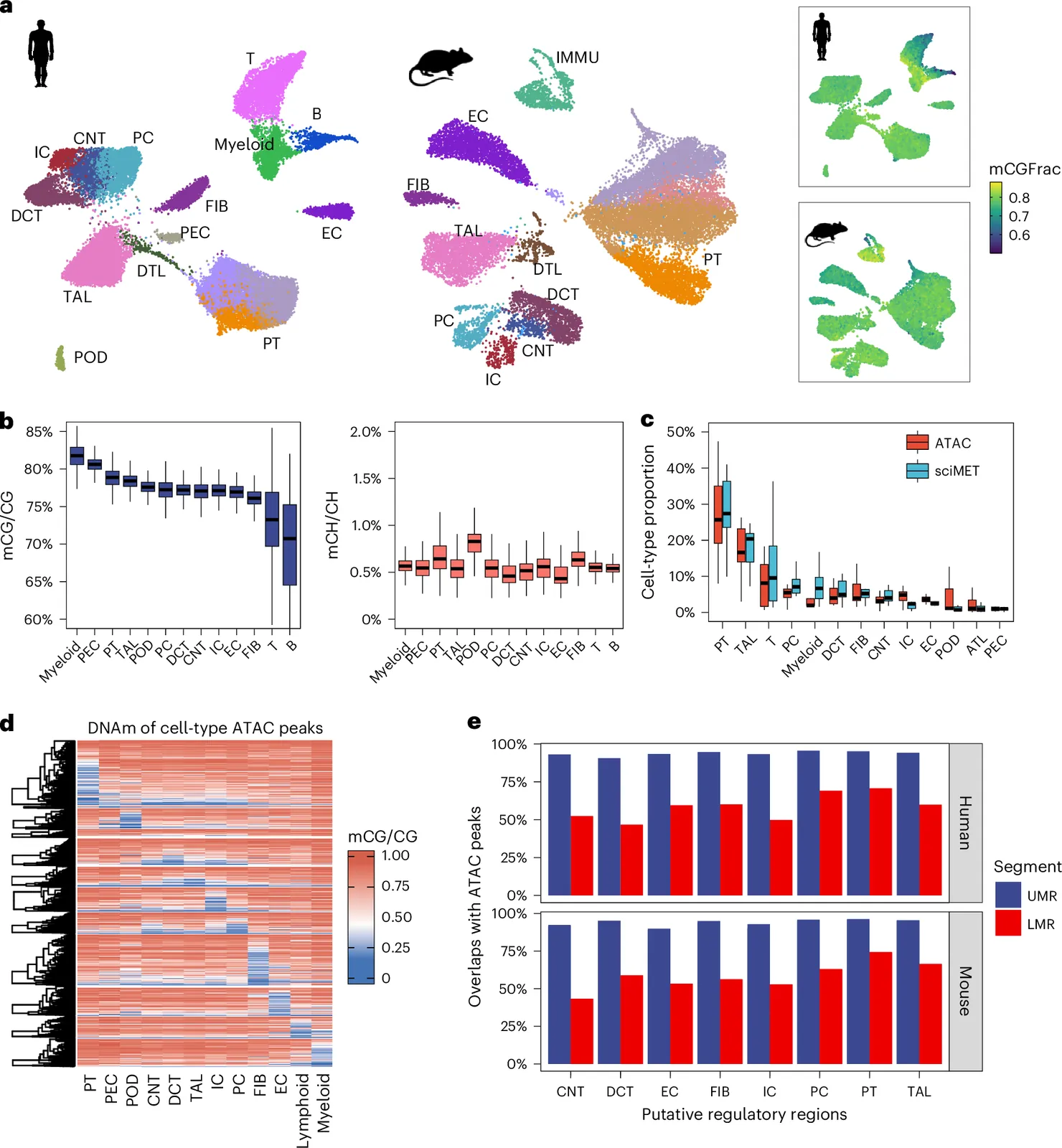
A cross-species single-cell kidney epigenome atlas reveals epithelial-dominant aging-like states in disease
Key Takeaways
  • Tubular epithelial cells in diseased human kidneys show pronounced epigenetic age acceleration and altered DNA methylation patterns.
  • Cross-species single-cell multiomic profiling identified loss of epigenetic repression and 3D genome reorganization in pathological epithelial repair states.
  • Spatial mapping linked epigenetic changes to localized niches of unresolved repair associated with activation of genes tied to renal decline.
Read the full article at Nature Aging

Continue exploring

Recommended MoL Picks

MoL PickCan You Really Measure Whether You’re Aging More Slowly?A younger epigenetic-age score can look like proof that an intervention is working. A major new analysis shows which clocks detect change—and why movement is not yet the same as longer healthspan.MoL PickWhat Changes in the Human Hippocampus with Age?A study of 40 postmortem brains maps a midlife shift in immune cells and a wider loss of cellular and genome organisation—but it does not show how to prevent cognitive decline.MoL PickPlan Your Health Tests in Three MinutesThe free Personal Health Diagnostics Planner turns a short questionnaire into a ranked, personalised PDF: a clearer starting point for deciding which health checks deserve attention now.