
Native H2 pathways enable biocompatible hydrogenation of metabolic alkenes in bacteria
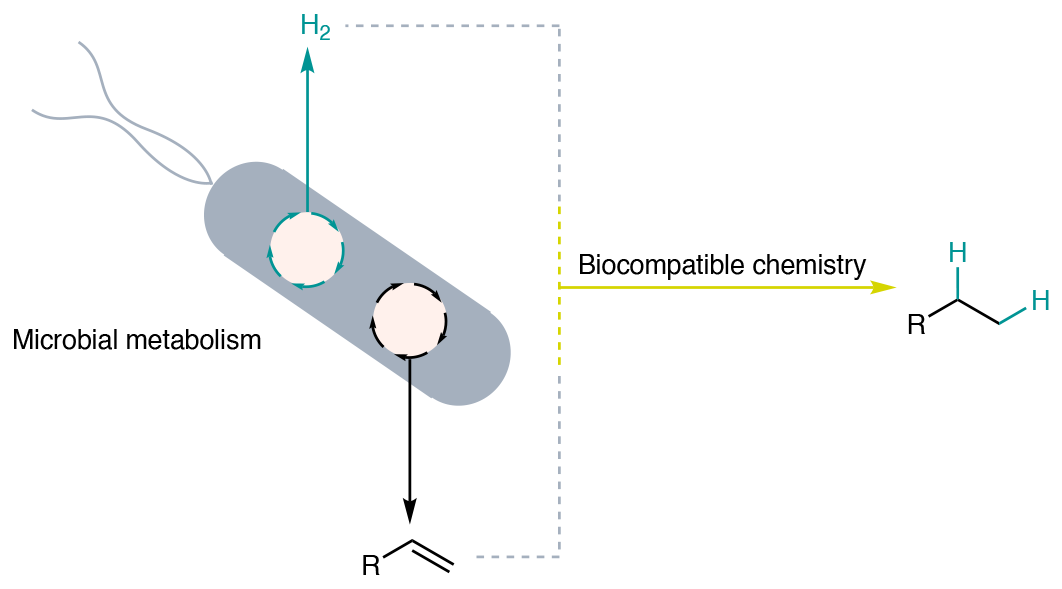
Researchers show unmodified microbes can produce H2 in situ to drive membrane-associated Pd-catalyzed alkene hydrogenation, and when paired with engineered E. coli alkene biosynthesis this enables simultaneous in vivo production of substrate and reagent to yield novel metabolic products; life-cycle assessment suggests hybrid chemo-microbial systems using waste feedstocks can be carbon-negative compared with electrolytic hydrogenation.
Why it mattersThis preclinical signal clarifies which mechanisms justify expensive validation steps before advancing into human-focused longevity programs.